
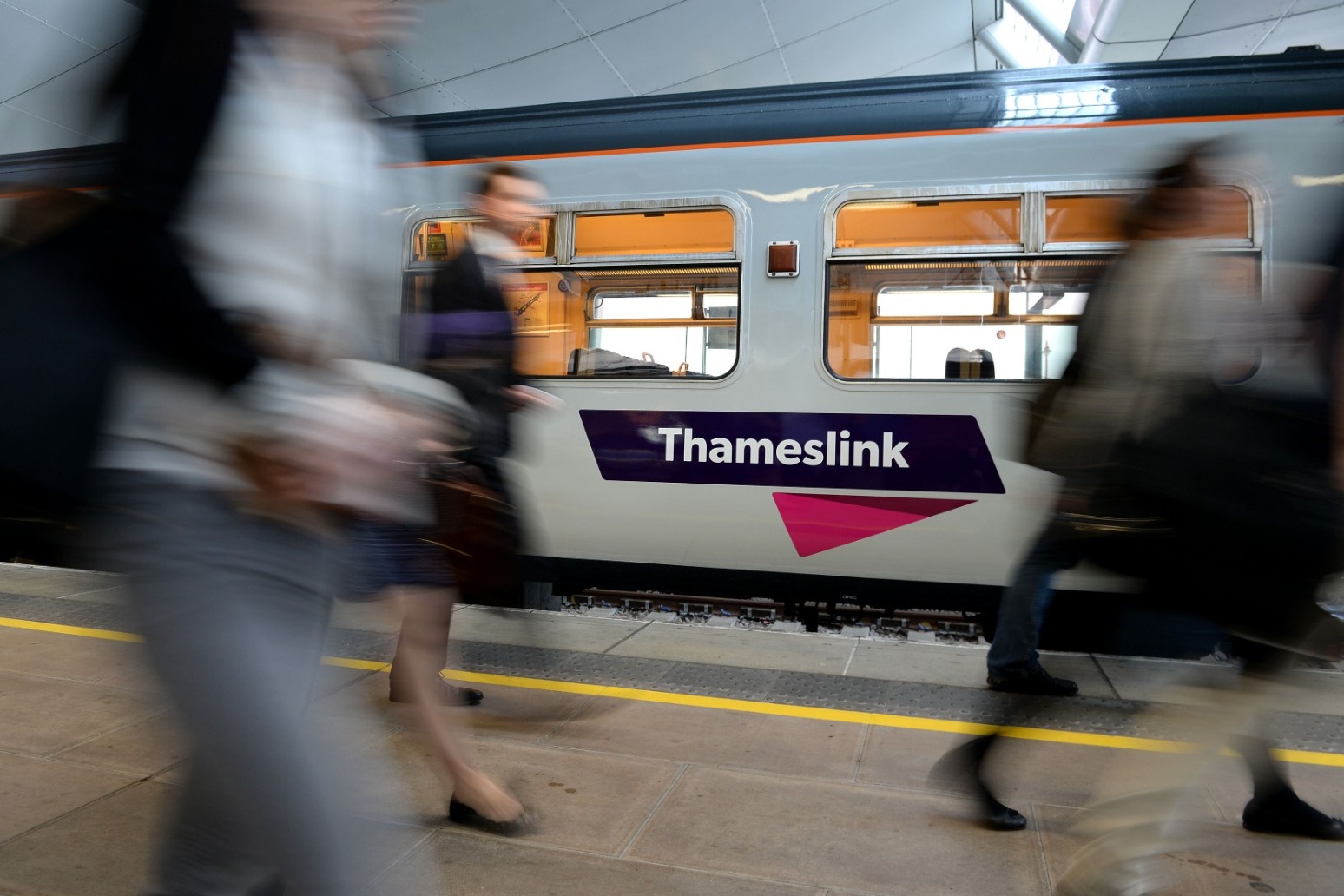
UK's biggest rail operator back in public ownership
Govia Thameslink becomes part of Great British Railways
The UK’s largest train operator’s services have been taken into public ownership.
Transport Secretary Heidi Alexander heralded the nationalisation of Govia Thameslink Railway (GTR) as “a defining moment in our reform of the railway”.
GTR services carry more passengers than any other operator in the UK, accounting for one in six train journeys in Britain.
Its four brands – Southern, Thameslink, Great Northern and Gatwick Express – cover large swathes of south-east England and beyond.
The Department for Transport (DfT) has committed to doubling the frequency of Gatwick Express services between London Victoria and Gatwick Airport from December, and introducing more early morning services on Saturdays and Mondays from this summer.
It also pledged to crackdown on graffiti in Thameslink train toilets, upgrade signalling between Farringdon and Blackfriars to cut delays, and deploy 110 new travel safe officers to tackle anti-social behaviour across the network.
Ms Alexander said: “From this Sunday, millions of passengers across the South East and East of England will be travelling on rail services back in public hands – run for the public good, not private profit.
“Bringing Britain’s largest train operator into public ownership is a defining moment in our reform of the railway.
“It gives us an opportunity to tackle the bread and butter issues people want, like driving down cancellations and improving the frequency of services to Gatwick Airport.
“As we set up Great British Railways (GBR), we’re putting passengers first, fixing what’s broken, and delivering a railway people can rely on.”
GBR will be a new public sector body bringing responsibility for tracks and trains under a single organisation for the first time since privatisation in the mid-1990s.
Legislation to create GBR was included in the recent King’s Speech.
The first train displaying GBR branding was a Southern train unveiled in Brighton earlier this month.
GTR chief operating officer John Whitehurst said: “This is a railway that carries millions of people to work, to school, and to see friends and family every single day.
“From this Sunday every one of them will be on a publicly owned service, which is a responsibility we take seriously and one we have been preparing for.
“We have spent the past year building the foundations, and bringing even deeper integration into our operations with Network Rail, with a single focus on what’s right for our customers and communities.
“That work means customers are already getting a railway that’s been transforming, and public ownership gives us the chance to go further to deliver the railway that millions of people across the South East deserve.”
In the mid-2010s, Southern’s passengers often suffered poor punctuality and reliability.
This particularly made headlines when it emerged the 7.29am departure from Brighton to London Victoria failed to arrive on schedule at 8.35am during any of the 240 attempts in 2014.
The operator blamed this on high demand and congestion.
There was also a long-running industrial dispute between Southern and its drivers and conductors over staffing issues, including a row about who would operate train doors.
On Sunday, GTR became the fifth operator to enter public ownership under the Government, following c2c, Greater Anglia, South Western Railway and West Midlands Trains.
LNER, Northern, Southeastern and TransPennine Express were already nationalised when Labour came to power.
Chiltern Railways’ services will be next to transfer on September 20, followed by Great Western Railways on December 13.
The full public ownership programme is expected to be completed by the end of next year.
Published: by Radio NewsHub