
 by Lisa Darvill - Newsroom Manager
Writing for Radio: Why it’s harder than you think
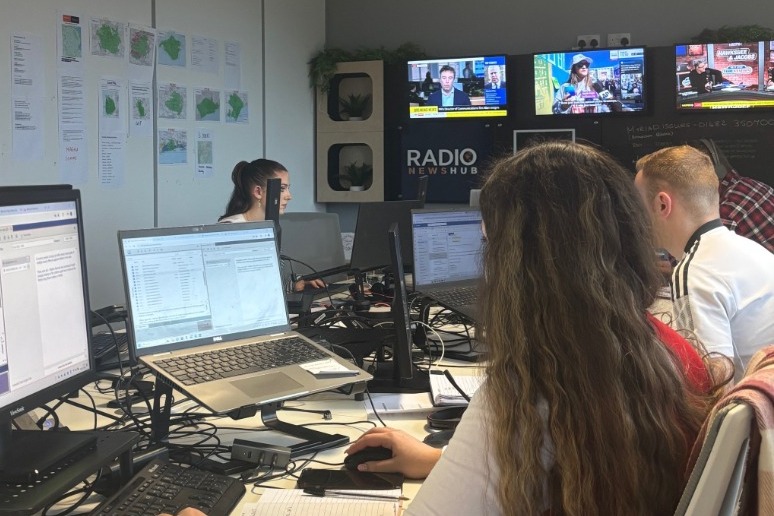
The team of broadcast journalists at Radio News Hub have literally have seconds to tell a story.
When it comes to writing our scripts for our news bulletins, we’re only writing a few sentences, so surely, it’s not that hard. Right?
Well, I’m here to tell you that sorry, you’d be wrong!
“Hey! What’s the story?”
Take something you’ve heard from the world of news and give it a go yourself, or any story in general. Can you summarise it, taking no more than 30 seconds? Ah, but do your first few words really capture my attention? Have you told me, without using any jargon, why I should care?
Have you kept it in the present tense (because if it’s already happened, again, why should I care?) and are you keeping it conversational? And what about if you’re quoting someone, what quote have you used? What are they saying, is it the most interesting part of their quote? How long it that, because again, it can’t be too long, you’re near your 30 seconds….
So, a few sentences become, rather tricky.
Storytelling through sound
Essentially, we’re in the business of telling stories. But the way in which we tell those stories in radio is unique, nuanced and as any broadcast journalist would agree, pretty special.
We don’t have time to waste, we need to cut through in most cases, in just one or two minutes. Our audience is not captive; they’re most likely doing something else at the same time. So, we need to get to the point nice and quickly. Out goes the luxury of really setting the scene, of taking our time, of building up a picture. In comes our ‘top line’ – what is happening, what’s the crux of the story.
I often ask the team what story they’re working on, and if it takes them a few minutes, I ask again. But what is the story? What’s the most important part of that for our listener? What do I need to know! By cutting through and really thinking about how to explain the story and the most important part of it, we get our lead sentence, our ‘top line’.
Shifting through the jargon
Every newsroom is flooded with press releases daily, all of them written with print in mind. They could be several paragraphs, even pages long. The art of a good broadcast journalist is to never copy and paste, but always ask questions, to re-write and find the real crux of the story. And spoiler alert; it’s usually halfway down the press release. Or, not even in the press release at all…
Then comes our audio.
We have the luxury and privilege of using sound to tell our stories. Just like the press releases or swathes of information, our raw interview can be long. So, it’s the same process, cutting through and getting to the most important, interesting and illustrative clip.
It could be the part where the interviewee’s voice breaks talking about an emotional moment, it could be when they use a fantastic analogy to explain an idea, it could be the shouts and jeers in the background that really make the clip resonate with our listener.
Yes, we have less words, but scripts do not create less of a picture, if anything, we can create a more vivid image in our listener’s mind in those 30 seconds than hundreds of words ever could.
Writing for radio is hard, yes, but we wouldn’t have it any other way.
If you want to learn more about our quality new content, including our hourly news bulletins, please get in touch.