
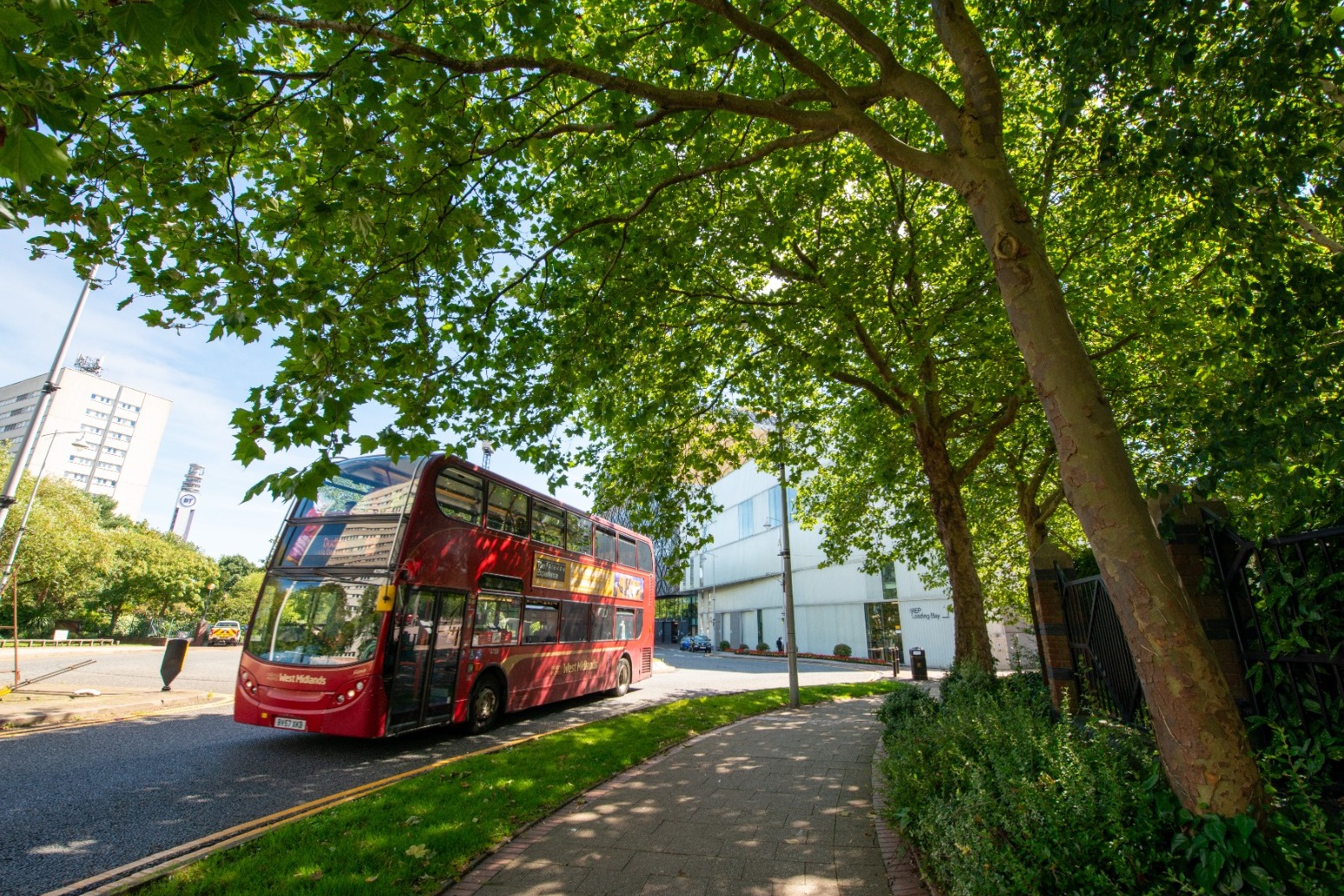
‘Tree deserts’ exposing millions to heat, pollution and ill health – charity
Millions of people in UK towns and cities are living in “tree deserts”, with not enough trees to protect them from air pollution, heat, stress and ill health, campaigners warn.
Trees in urban areas can provide shade and cooling in increasingly hot summers and reduce worsening flooding as the climate changes, cut air pollution, and alleviate stress and depression, the Woodland Trust said.
They can also boost wildlife, improve house prices and business investment, and create places where people want to live and work and can have healthy, active lifestyles, the charity said.
But the trust warns many towns and cities do not have enough tree cover in residential areas to meet the needs of their communities, putting them at risk of ill health, pollution and environmental harm.
It said there are stark inequalities in access to the benefits communities get from urban trees, with a north-south divide across the UK.
The Woodland Trust has drawn up “tree equity” scores, which look at the existing tree canopy cover in neighbourhoods, and cross-reference it with population density, local environmental conditions such as heat and air pollution, and social factors including deprivation, health inequalities and age.
These neighbourhood scores show where people do not have enough trees to meet their needs, rather than simply low or high tree cover.
The trust has used the data to highlight the towns and cities where the greatest proportion of people are living in neighbourhoods with “critically low” tree equity scores.
The analysis reveals 15 of the 20 worst-performing towns and cities for tree equity are in the north of England, and the north-east of England has no towns or cities in the top performing 100, the data show.
Clacton-on-Sea in Essex is the worst performing town or city in England, with almost all of its population in areas with critically low tree equity, while Holyhead in North Wales and Omagh in Northern Ireland have their entire population living with a lack of critical urban tree cover.
At the other end of the scale, leafy areas of south-east England dominate the rankings for best performing cities and towns, with places such as Winchester, Tunbridge Wells and St Albans providing enough tree cover to protect all residents.
Published: by Radio NewsHub