
Thousands of homes without power as Storm Goretti brings 99mph winds
Thousands of homes are without power as Storm Goretti hits the UK with a rare red warning issued for “dangerous, stormy” winds.
The Met Office said “violent gusts” will hit parts of Cornwall and the Isles of Scilly over the next few hours bringing a potential danger to life.
Winds of 99mph have already been recorded at St Mary’s Airport on the Isles of Scilly, which is a new record for the site, the forecaster said.
More than 40,000 properties were without power in the South West at about 8pm, according to National Grid’s website, while 2,000 had no power in the West Midlands and 1,500 in Wales.
The red warning, in place until 11pm, says people should expect damage to buildings and homes, very large waves, flying debris resulting in danger to life, power cuts and public transport cancellations.
A red warning means dangerous weather is expected and action should be taken to keep safe from the impact of it, the Met Office said.
The forecaster’s description of a red warning on its website reads: “It is very likely that there will be a risk to life, with substantial disruption to travel, energy supplies and possibly widespread damage to property and infrastructure.
“You should avoid travelling, where possible, and follow the advice of the emergency services and local authorities.”
Dozens of schools in Cornwall closed early on Thursday afternoon as the storm approached.
Network Rail said all trains in Cornwall would be suspended from 6pm on Thursday.
In Devon, trains on the Exeter-Okehampton and Exeter-Barnstaple routes were to be suspended from the same time because of forecast high-wind speeds.
Passengers were advised to travel earlier and not to attempt travel late in the afternoon.
Services on affected routes are expected to be disrupted on Friday morning.
Replacement road transport will not be available as road conditions are also expected to be affected by the weather.
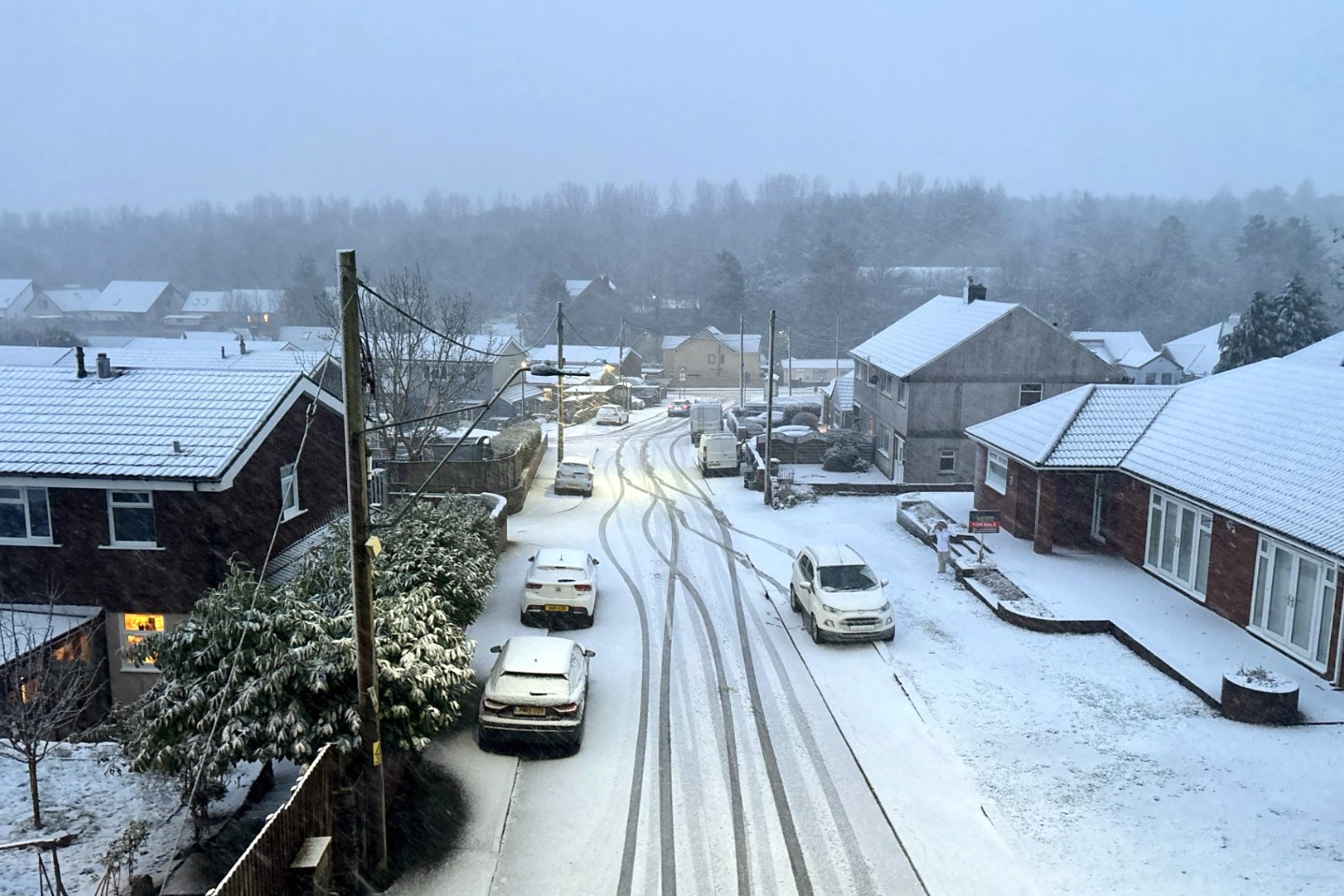
The storm, named by French weather forecaster Meteo France, has been described as a “multi-hazard event” by the Met Office, with as much as 30cm of snow possible in parts of the UK.
Weather warnings have been issued for snow, wind, rain and ice across the country, ahead of likely “disruption and dangerous travelling conditions”.
Met Office chief forecaster Neil Armstrong said: “Storm Goretti will be a multi-hazard event, with the most significant impacts from snow in parts of Wales and the Midlands and the very strong winds in the far South West, though heavy rain in some parts of Wales and East Anglia also has the potential to bring disruption to many.”
The BBC reports that the storm will bring a “weather bomb” to the UK.
Also known as explosive cyclogenesis, a weather bomb is caused when the central pressure in an area of low pressure falls rapidly.
The pressure has to fall by 24 millibars in 24 hours to qualify.
According to the BBC, Storm Goretti will see a pressure drop of 36 millibars in the 24 hours from 6pm on Wednesday to 6pm on Thursday.
The Met Office said that winds during a weather bomb can be “strong enough to bring down trees and cause structural damage”.
A yellow warning for wind has also been issued for the rest of the south coast and Wales, where gusts of up to 70mph are forecast.
The weather service said the “exceptional” wind speeds could be stronger than recent storms such as Ciaran in 2023 and Eunice in 2022.
Meanwhile, an amber warning for snow runs from 8pm until 9am on Friday covering parts of Wales, the Midlands and Yorkshire.
About 10 to 15cm of snow is likely across the warning area, with up to 30cm on higher ground in Wales and the Peak District.
Dozens of schools across the Midlands and Wales have announced they will be closed on Friday where the amber weather warning has been issued.
The last red weather warning in the UK was in association with Storm Eowyn in January 2025, which was a red wind warning and covered parts of central and southern Scotland, according to the Met Office.
The Met Office’s website says amber weather warnings are issued when there is an increased likelihood of impacts from severe weather, including the possibility of travel delays, road and rail closures, power cuts and the potential risk to life and property.
Yellow warnings are issued for a range of weather situations, including when it is likely that the weather will cause some low level impacts, including some disruption to travel in a few places, or when the weather could bring much more severe impacts to the majority of people but the certainty of those impacts occurring is much lower, according to the Met Office.
Published: by Radio NewsHub