
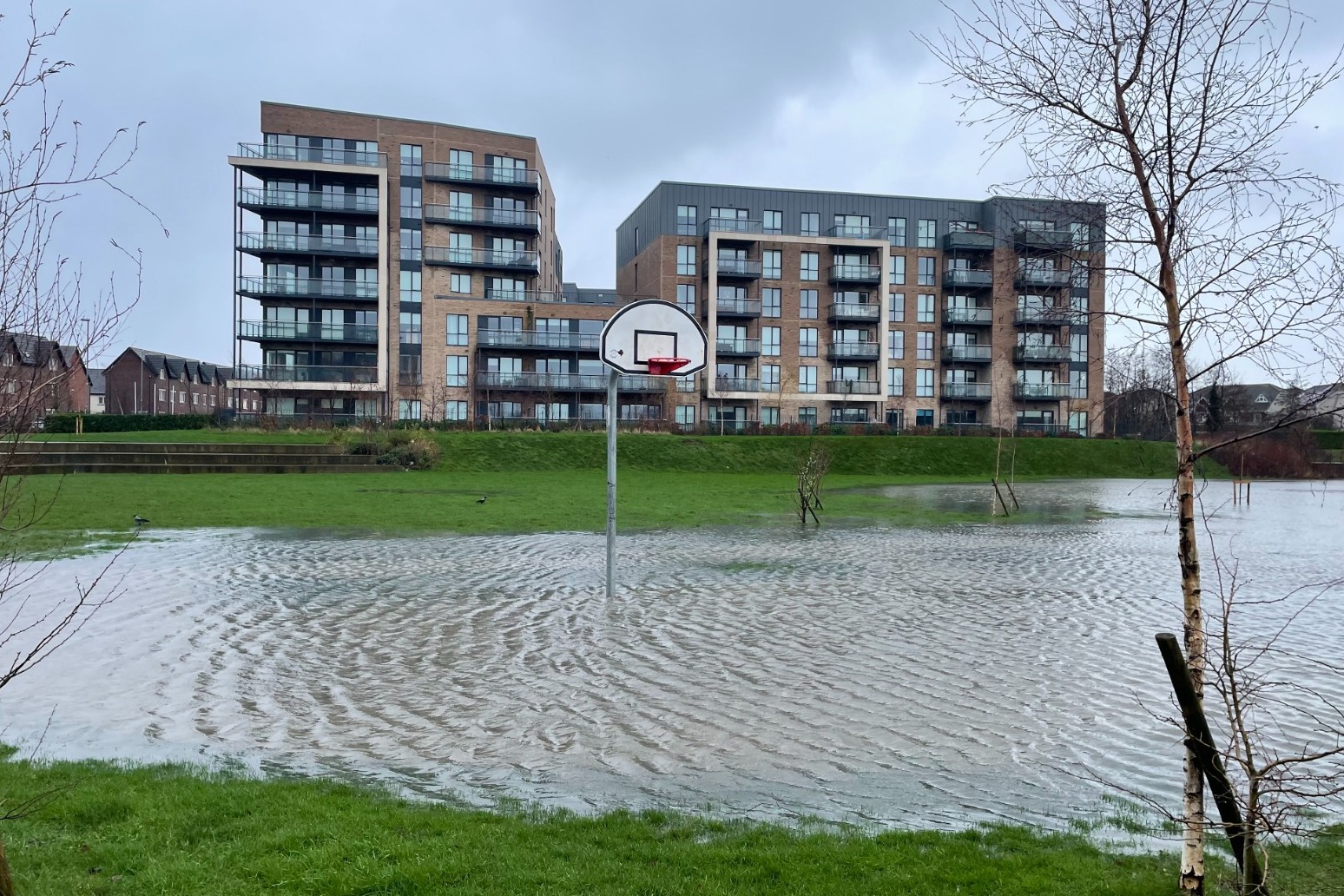
One in nine new homes built in flood risk areas in ‘worrying’ trend – analysis
One in nine new homes were built in flood risk areas between 2022 and 2024, exposing a “worrying” rising trend, analysis shows.
The analysis carried out by insurer Aviva reveals that 11% of the 396,602 new homes in England built over the period were built in areas of medium or high risk of flooding, while more than a quarter (26%) have some flood risk.
Aviva warned its analysis, based on new homes address data and the Environment Agency’s latest assessment of flooding risk at a constituency level, showed a rising proportion of new homes are being built in flood risk areas.
Previous analysis by the insurance company based on Government statistics had showed one in 13 (8%) new homes were built in flood risk zones in the decade to 2022.
While comparable statistics have not been published since 2022, Aviva said its assessment showed the number of homes built in flood risk areas has accelerated as housebuilding increases.
The problem is particularly acute in and around the capital, the analysis reveals.
A third (32%) of the constituencies with the highest number of new homes built in high or medium flood risk areas between 2022 and 2024 are in Greater London or Essex.
And, as the risk of flooding rises with climate change, even more of the recently built homes will be at risk by 2050, the analysis shows.
By mid century one in seven (15%) of the homes built between 2022 and 2024 will be at high or medium risk of flooding as extreme weather worsens, and almost a third (30%) will face some kind of flood risk.
Aviva boss Jason Storah said that while the company was supportive of Government efforts to build more homes – with Labour pledging to construct 1.5 million during this Parliament – it was “vital” they were built in the right place.
Aviva also warns the new homes being built in flood risk areas are not eligible for the Flood Re scheme to make insurance affordable and accessible for households living in high-risk areas.
Homes built since 2009 are excluded from Flood Re, to prevent building in flood risk areas.
Mr Storah, chief executive of UK and Ireland General Insurance, Aviva, said: “We support the Government’s plans to build more homes to help drive economic growth.
“However, this growth needs to be sustainable and it’s vital, therefore, that new homes are built in the right places and with resilience in mind to help homeowners get ready for future impacts.
“As our analysis shows, too many new homes have been built in higher risk areas.
“It’s particularly worrying that this trend has risen in recent years, just as house building accelerates.
“Importantly, these homes are not protected by the Flood Re scheme, which excludes homes built after 2009 to prevent more new homes being put at risk. Sadly, as the study shows, this simply hasn’t happened.”
He said there should be a “presumption against new developments in high risk areas” in the planning rules, as well as mandatory flood resilience measures in building regulations for new homes in areas at risk.
He added: “Building new homes and locating them in lower risk areas are not mutually exclusive objectives.
“We must do both if we are to deliver sustainable economic growth and get ready for the future.”
Commenting on the findings, former Environment Agency chairwoman, and now chairwoman of ClientEarth and the London Climate Resilience Review, Emma Howard Boyd, warned building houses that would flood was “a future scandal waiting to happen”.
“With scientists warning that parts of the UK could be at risk of further flooding for months to come because so much rain has fallen this year, now is the time to strengthen planning rules.
“Yet the current Government National Planning Policy Framework consultation points to watering down flood protections, meaning more water in our homes,” she warned.
Published: by Radio NewsHub