
King to acknowledge ‘great suffering of the past’ during visit to Caribbean
The King will begin his tour of the Caribbean by acknowledging the “great suffering of the past” and confirm Commonwealth leaders will discuss the legacy of slavery at a summit he will open.
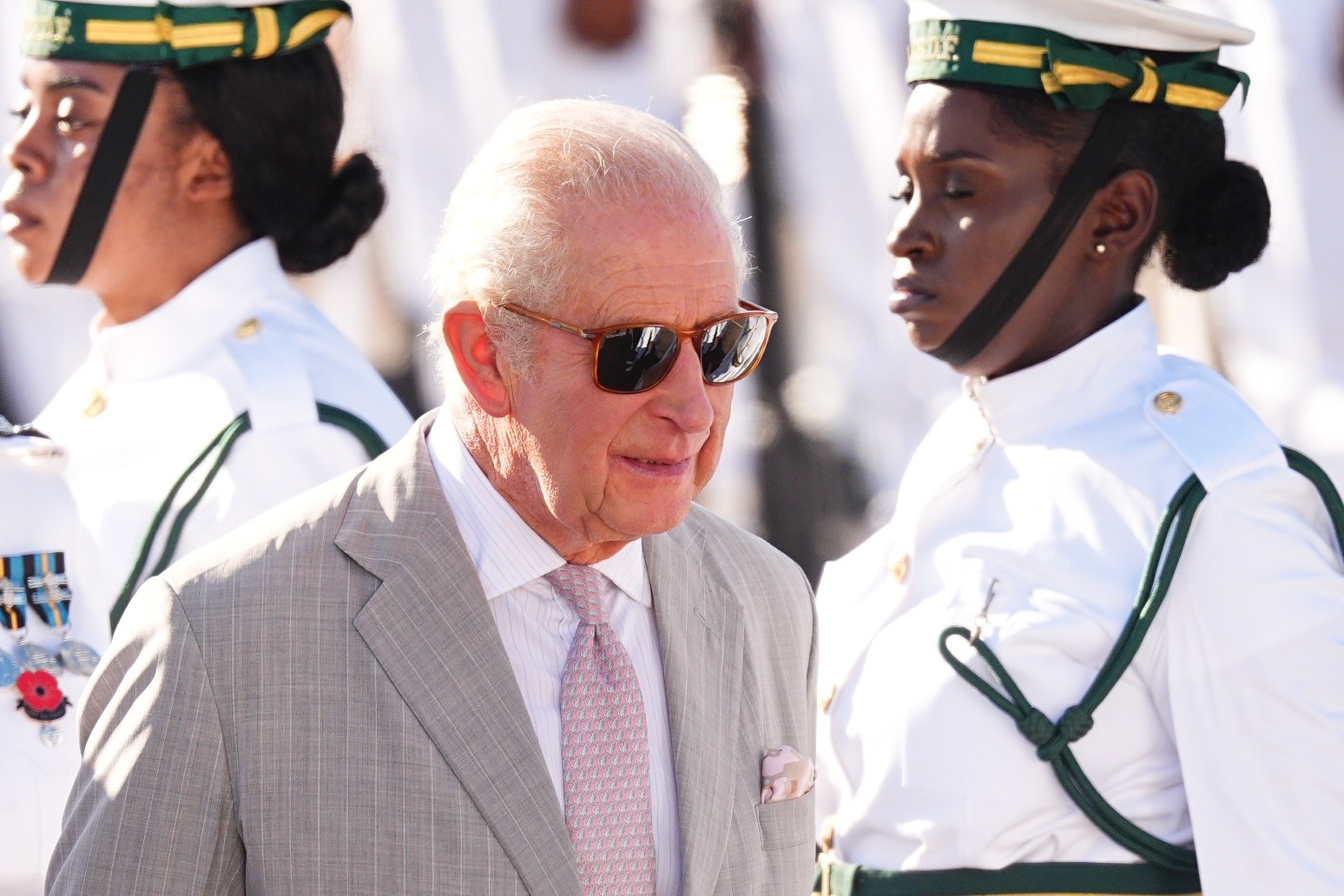
Charles arrived in the Bahamas to a ceremonial welcome and later will attend a youth parade where he is due to deliver a speech saying some of the nation’s culture was “born out of darkness”.
His visit comes in the wake of renewed calls from Caribbean nations for Britain to apologise for its role in selling enslaved people for profit and for reparations.
The nine-day regional tour, which includes a solo state visit to Guyana, will culminate in the Commonwealth Heads of Government Meeting (CHOGM) hosted by Antigua and Barbuda and presided over by the King, joined by the Queen, in his role as head of the “family of Nations”.
Charles is expected to tell young people and guests: “Some of what is best in Bahamian culture today, the most joyful, the most hopeful, the most bright, was born out of darkness.
“It is only right that we should acknowledge the great suffering of the past in these islands and beyond, even as we rejoice in the successes of the present and build new opportunities for the future.”
The King will make clear that CHOGM leaders will discuss matters around the legacy of slavery next week in Antigua.
He will add: “Tonight it gives me enormous hope to see the way generations of Bahamians have carried the history, the legacy and the promise bequeathed to you by your ancestors, with pride in your hearts and purpose in your steps.
“You have not only carried their legacy; you have nurtured and enhanced it, creatively and courageously, and we have seen tonight what a wonderful gift it is to the Bahamas and to the world.”
The Bahamas trip is a solo visit for Charles, who will speak at the Future Bahamas Youth Rally and Exhibition at Clifford Park, the historic site where the Bahamas officially gained its Independence in 1973.
The King, then Prince of Wales, attended the independence celebrations to deliver a formal message from Queen Elizabeth II to Bahamians.
The visiting head of state stepped down from Voyager, the ministerial jet, and was greeted by his representative in the Bahamas, governor-general Dame Cynthia Pratt, Prime Minister, Philip E Davis and other dignitaries.
Standing nearby was a guard of honour, 96 members of the Royal Bahamas Police Force and the Royal Bahamas Defence Force who gave a royal salute when Charles stepped onto a dais.
The Bahamian national anthem was played by bands from the two units on parade and the King inspected the police officers and military personnel.
A Buckingham Palace spokesperson said: “At the request of host governments, the King’s programme will primarily focus on shining a light on the many modern partnerships and opportunities for the future that are having a transformative effect on the region, as it confronts the challenges of today.
“For His Majesty, this tour is both a new journey but also the continuance of a lifelong one, in which he has sought to engage, understand and educate about the most shameful aspects of our past. This will therefore also be reflected in differing ways and words during the tour, as you would expect.”
In the run up to the leaders’ summit, the Commonwealth’s secretary general Shirley Botchwey said last week it “wouldn’t hurt”, when asked during an interview if the King should apologise.
And Guyana’s President Mohamed Irfaan Ali said recently Charles has recognised slavery as the darkest days in human history – but moving to the apology is “the next step”.
The King follows the guidance of his ministers and it is understood the Government has not advised him to offer an apology or reparations, in keeping with established policy.
Prime Minister Andy Burnham and Foreign Secretary Ed Miliband will join Charles in Antigua for the gathering of Commonwealth leaders.
The UK Government’s position on reparations is well established, it acknowledges the trade in enslaved people was abhorrent and its impact is still felt today, but it will not pay financial reparations for historical acts that did not break international laws at the time and is committed to continued dialogue with Commonwealth nations.
Charles acknowledged the “appalling atrocity of slavery”, describing it as something “which forever stains our history, when he attended the ceremony marking Barbados’s historic transition to a republic in 2021.
A year later he described how he was on a personal journey of discovery and was continuing to “deepen my own understanding of slavery’s enduring impact”, in a speech at the opening of a Commonwealth summit hosted by Rwanda.
Published: by Radio NewsHub