
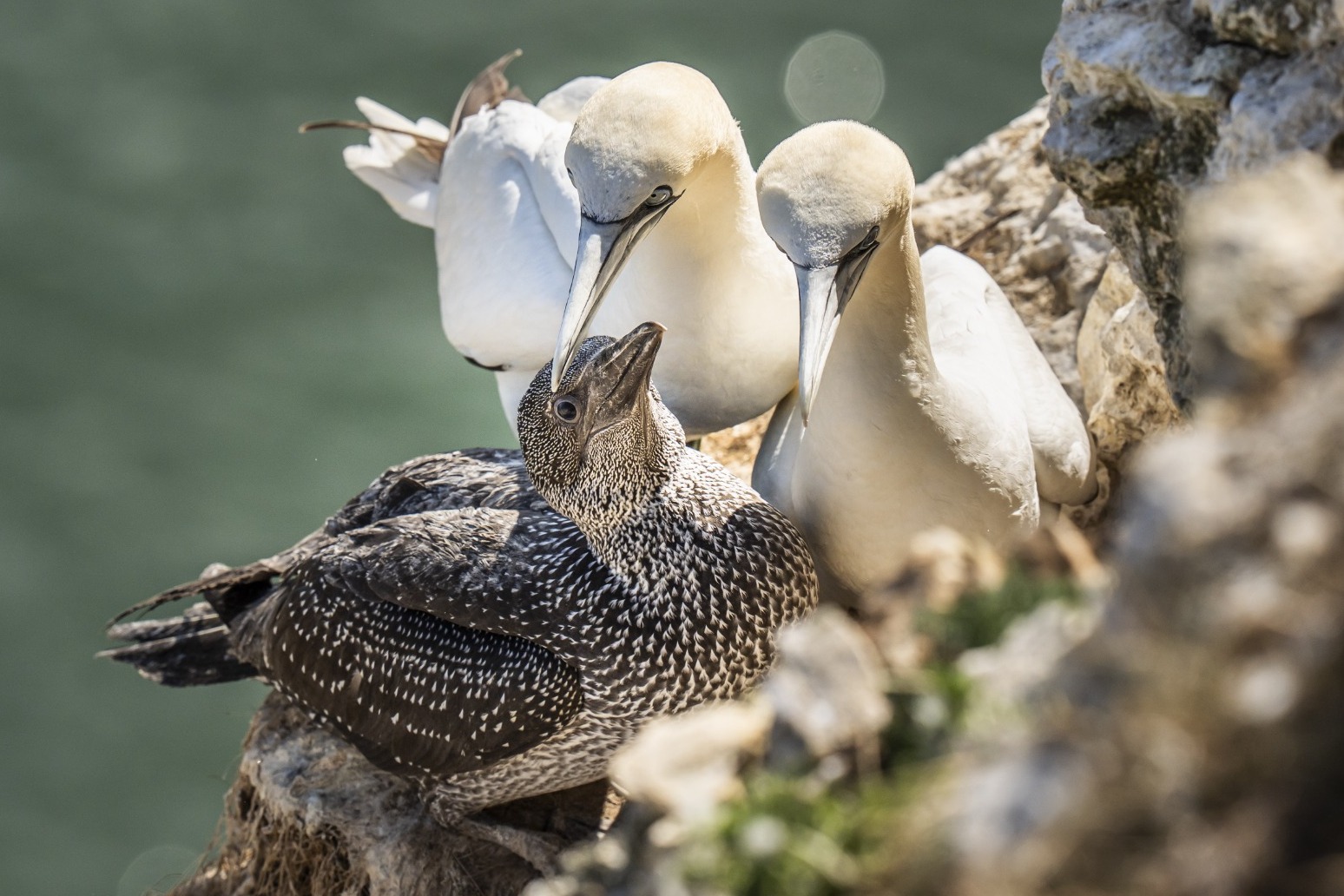
Key gannet colonies hit by bird flu could take two decades to recover – study
Two of the world’s largest gannet colonies may take nearly two decades to recover from a devastating outbreak of bird flu, a study has warned.
Researchers said the 2022 avian flu outbreak dealt an “unprecedented deadly blow” to UK seabirds, and led to a surge in northern gannet deaths at Bass Rock in eastern Scotland and Grassholm in south-west Wales.
Populations at the two key colonies are not set to have fully recovered from the impact of the disease until at least 2041, their research finds.
Northern gannets’ global conservation status – which is currently a least concern on the IUCN Red List of threatened species – should be revised in light of the impact a single disease outbreak has caused, the scientists urged.
Their study, published in Biological Conservation, found death rates among northern gannets jumped from an annual average of 6% at Bass Rock in the 11 years prior to 2022, to 33% during the bird flu outbreak.
That led to a 26% fall in the size of the colony on the island in the Firth of Forth in 2023, the research found.
It is a similar story at Grassholm, a remote, uninhabited island off the coast of Pembrokeshire, where mortality rates rose from an average annual 11% in the 11 years before the outbreak, to 47% as the disease swept the colony.
The soaring mortality rates led to a 38% decline in the size of the colony at Grassholm in 2023.
The researchers warned that as adult breeding birds drive population growth in colonies, the spike in deaths will have a long-term impact – with modelling suggesting the colonies are unlikely to recover to the size they would have been until 2041, and possibly longer.
After St Kilda, west of the Outer Hebrides, Bass Rock and Grassholm are the world’s biggest breeding sites for northern gannets – a large, white seabird with a wingspan of up to two metres which is found in the North Atlantic.
Jude Lane, lead author of the study and marine conservation scientist at the RSPB, said: “The bird flu outbreak in 2022 dealt an unprecedented deadly blow to UK seabirds and these findings show that key gannet colonies on Bass Rock and Grassholm will be impacted for decades to come.
“While we can’t prevent diseases like bird flu, with long-term monitoring at key colonies and across wider populations, we can better understand the impacts.
“With that knowledge we are in a far better position to address the many other pressures facing seabirds and halt the devastating declines of recent years.”
Jana Jeglinski, senior author of the study and associate professor at the Department of EcoScience at Aarhus University in Denmark, said: “The scale of mortality we observed during the 2022 outbreak was unprecedented.
“Our study shows that gannet populations will not simply bounce back from the blow of a single disease outbreak but instead will take decades to recover.”
She warned: “We must not forget that gannets, and seabirds in general, are also under increasing pressure due to bycatch, plastic pollution and climate change to name but a few.”
Conservationists warn 62% of the UK’s breeding seabird species are now in decline, with the figure rising to 70% in Scotland, and many are “red listed” amid concerns over their conservation status.
Published: by Radio NewsHub