
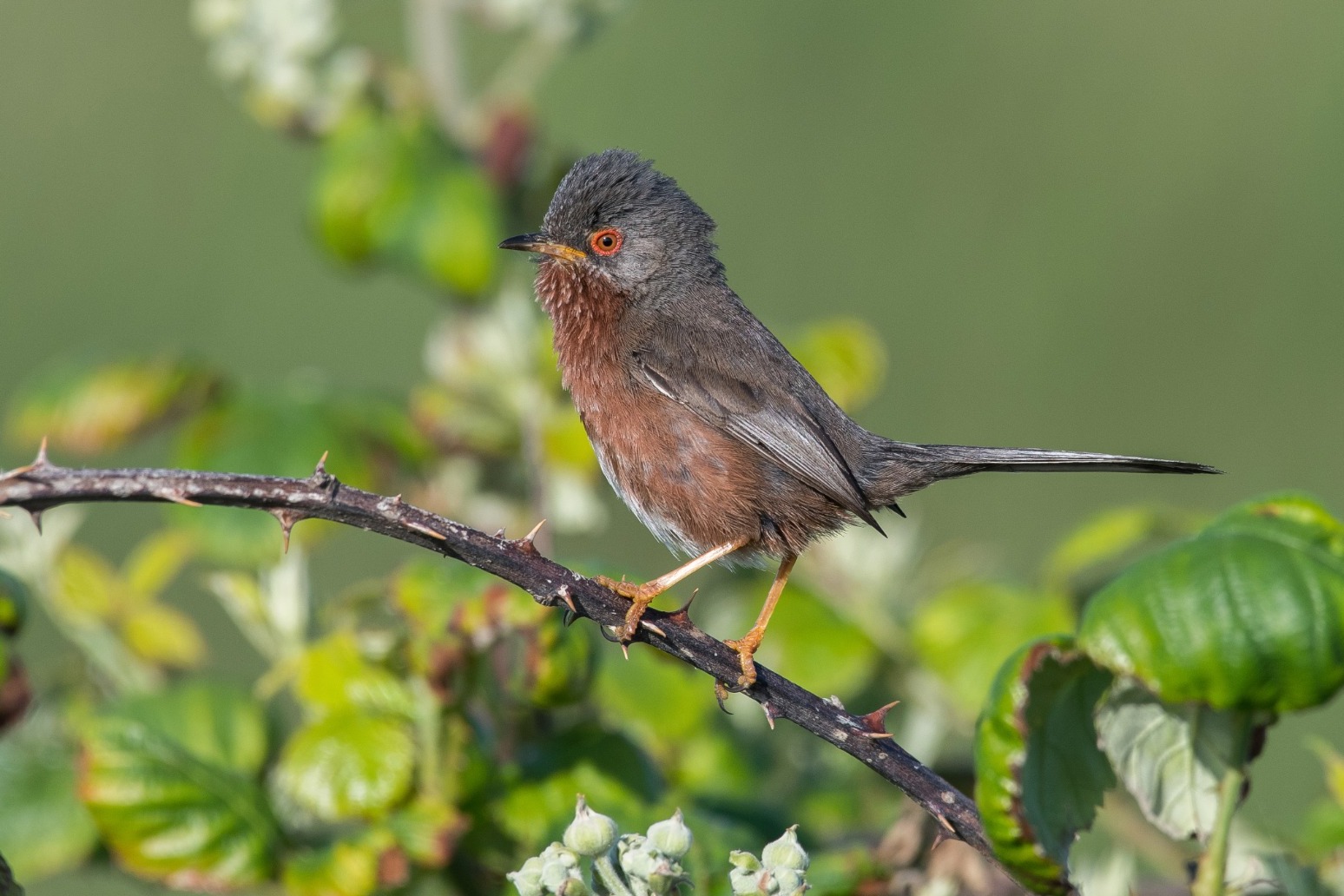
Dartford warblers see record year after comeback from brink of extinction
Dartford warblers saw a record year in 2025 as the species continues to bounce back from the brink of extinction in the UK, the RSPB said.
The small charismatic birds, which are currently on the “amber list” for conservation concern, suffered a population crash in the 1960s because of cold winters, which left only a few breeding pairs in Dorset.
But more than 264 pairs were counted on RSPB nature reserves last year, marking a 44% increase in five years, according to a national survey.
The grey-brown birds were recorded at 14 RSPB nature reserves, including 97 pairs at RSPB Arne, 25 at RSPB Aylesbeare, 41 at RSPB Minsmere and 23 at RSPB Farnham Heath.
The total number of pairs in 2025 marks the highest ever recorded, with the RSPB saying the birds’ comeback is partly thanks to staff and volunteers restoring their heathland habitat.
Peter Robertson, RSPB Arne’s senior site manager, said: “Restoration of heathland across RSPB Arne has been on a truly landscape scale.
“Visiting heathland during summer, the sound of Dartford warblers singing is everywhere.
“Being able to hear those calls is the perfect reminder that the hard work is paying off.”
The birds are often found singing a scratchy tune and perched on top of gorse in lowland heathland in southern England.
As a species that nest on the ground, they heavily rely on dense gorse within mature heathland areas for vital food, shelter and protection, but it means they are also particularly vulnerable to cold winter weather.
Lowland heathland is also one of the most threatened habitats in the UK, with estimates that 80% has been lost since the 1800s due to forestry and land-use change.
RSPB staff and volunteers have been restoring the habitat on the charity’s nature reserves by removing conifer plantations, reverting arable land and joining up fragmented heathland areas to provide Dartford warblers with more dense gorse.
Restoring heathland also benefits a range of wildlife from birds and mammals to insects, reptiles and amphibians, the RSPB said.
Last year, the charity also worked with the British Trust for Ornithology (BTO) and Natural England to carry out a UK-wide heathland birds survey, which aimed to update the range and population estimates for several species.
It found that UK population estimates for Dartford warblers has reached around 4,100 territories – areas where they nest and defend from intruders – up from 3,200 during the last national survey in 2006.
Greg Conway, BTO senior research ecologist, said: “The results clearly show just how well-managed protected areas are essential for the recovery of these, and other habitat specific species.
“With the creation and improvement of more suitable sites, we can hope to see continued range expansion and population increases in the future.”
Published: by Radio NewsHub