
D-Day forecaster’s ‘head would have exploded’ at modern weather technology
A veteran RAF meteorologist has described how Jim Stagg’s “head would have exploded” if the D-Day forecaster had access to modern computer weather models.
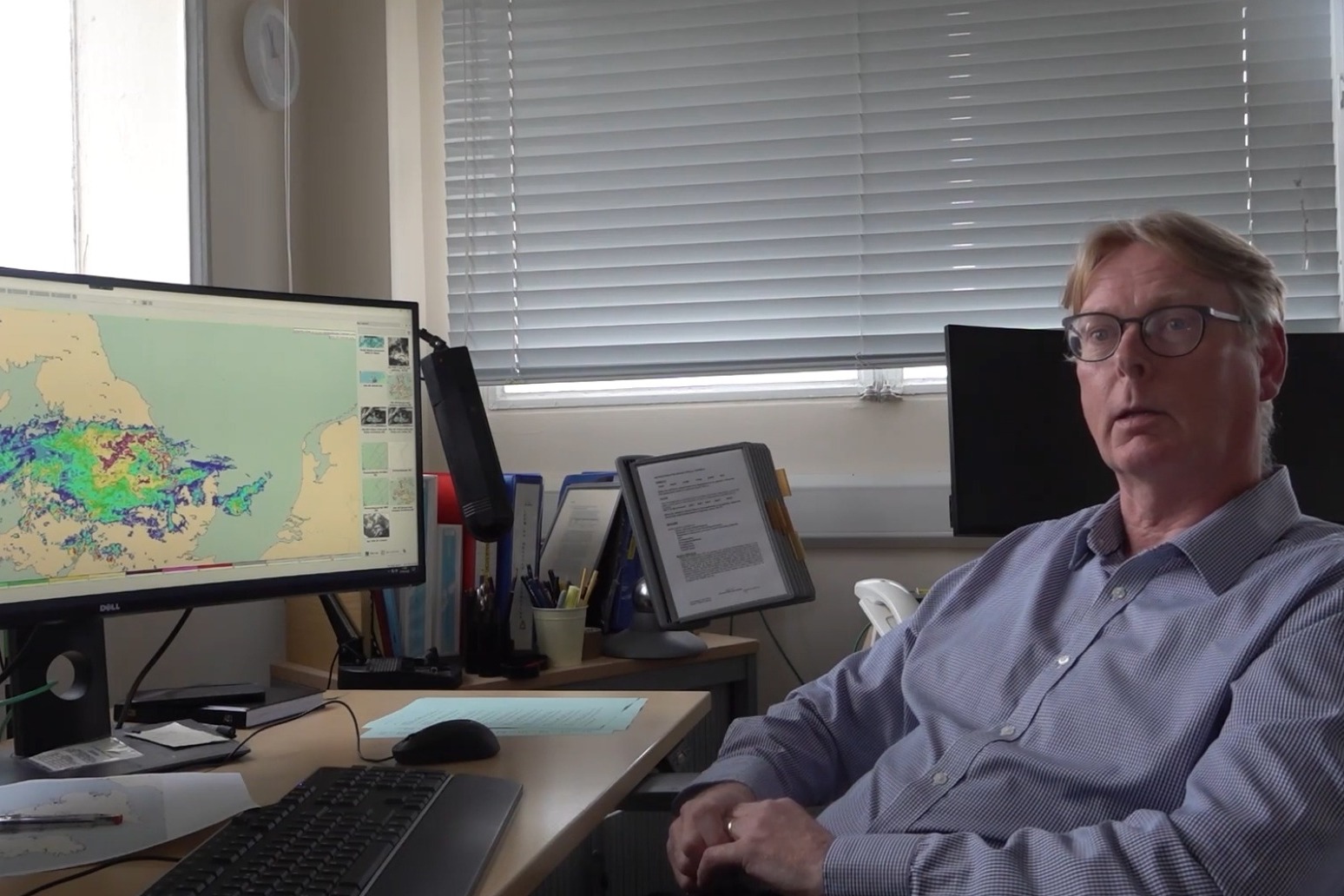
Bill Shiel Dods, who performs a similar role in 2026 to what Stagg was doing in 1944, said it was like “Disneyland” for a forecaster when he worked as an extra on the new movie Pressure, which centres on his predecessor’s advice about the timing of the Normandy Landings. Mr Shiel Dods said he fully understands the pressure Stagg was under when his advice on the likely weather in the Channel was crucial to General Eisenhower’s decision-making for the invasion. “Hopefully, I will never be in that situation where I have the fate of thousands and thousands of soldiers and airmen on the line,” he told the Press Association. Mr Shiel Dods said: “There’s a scene in the film where (Stagg) is briefing the Joint Chiefs of Staff, and (General Bernard) Montgomery says ‘not good enough’, because Montgomery wants to get off and start the invasion as soon as possible and not delay because of weather. “I’m not going to say I’ve been anywhere near the level of pressure that Stagg was under, but I’ve had to brief aircrew, and they haven’t been always been thrilled with the message I’m passing to them. “And you do get pushed back as to how confident you are in the forecast, and where could it go wrong. “Those questions are bread and butter to us, really.” Mr Shiel Dods has been with the Met Office for more than 40 years, and a forecaster at RAF Leeming, in North Yorkshire, since 1993. With his team, he provides detailed weather information for the flight crews flying out of the base, near Northallerton, as well as others across the north of England. Asked what Stagg would have made of the technological differences between 1944 and 2026, Mr Shiel Dods said: “I think his head would have exploded.” He said the biggest differences are the use of satellite imagery and live radar data. He said: “The level of detail we have now is head-and-shoulders above. “I’m sure Stagg would have killed to have this amount of data available to him.” Mr Shiel Dods said: “The technology we use is vastly different, but I think essentially we are doing the same job that my predecessors were doing in World War Two, which is providing advice and support to our military users so they can operate safely and make the most of their often limited resources.” He is very familiar with what information Stagg was working with 82 years ago, and said that “history’s proved him right”. “Fortunately, Stagg was right and Eisenhower, in his wisdom, followed the British guidance rather than American because I think, otherwise, it could have been quite a bit poorer for the outcome of the war,” he said. Mr Shiel Dods has a small part in the movie, as a meteorological assistant working in the office, which came about because he is one of the few forecasters still working who was trained to draw weather charts by hand. When he first heard they were making it, he told colleagues: “It’d be great if they’re looking for a gin-soaked old forecaster to play a part.” He said: “And then, quite by chance, a few weeks later, I got a message from one of my colleagues saying they were looking for people with experience of drawing up charts. “Obviously, when I started in the Met Office in 1984, this was what I was doing on a day-to-day basis. “So I sent off an email to the production company and said, ‘This is my background. Would you be interested?’, and they got back almost straight away.” He said he was “blown away” by the set. Mr Shiel Dods said: “It felt totally authentic. “I went into the forecast room on the first day, and I knew it was going to be good, but I was blown away by the level of detail. “It was like Disneyland for a Met forecaster.” He said: “It was a thrill just to be in the forecast room because it took me back to when I started my career, but also to see Oscar-winning and Bafta-winning actors was quite exciting.”
Published: by Radio NewsHub