
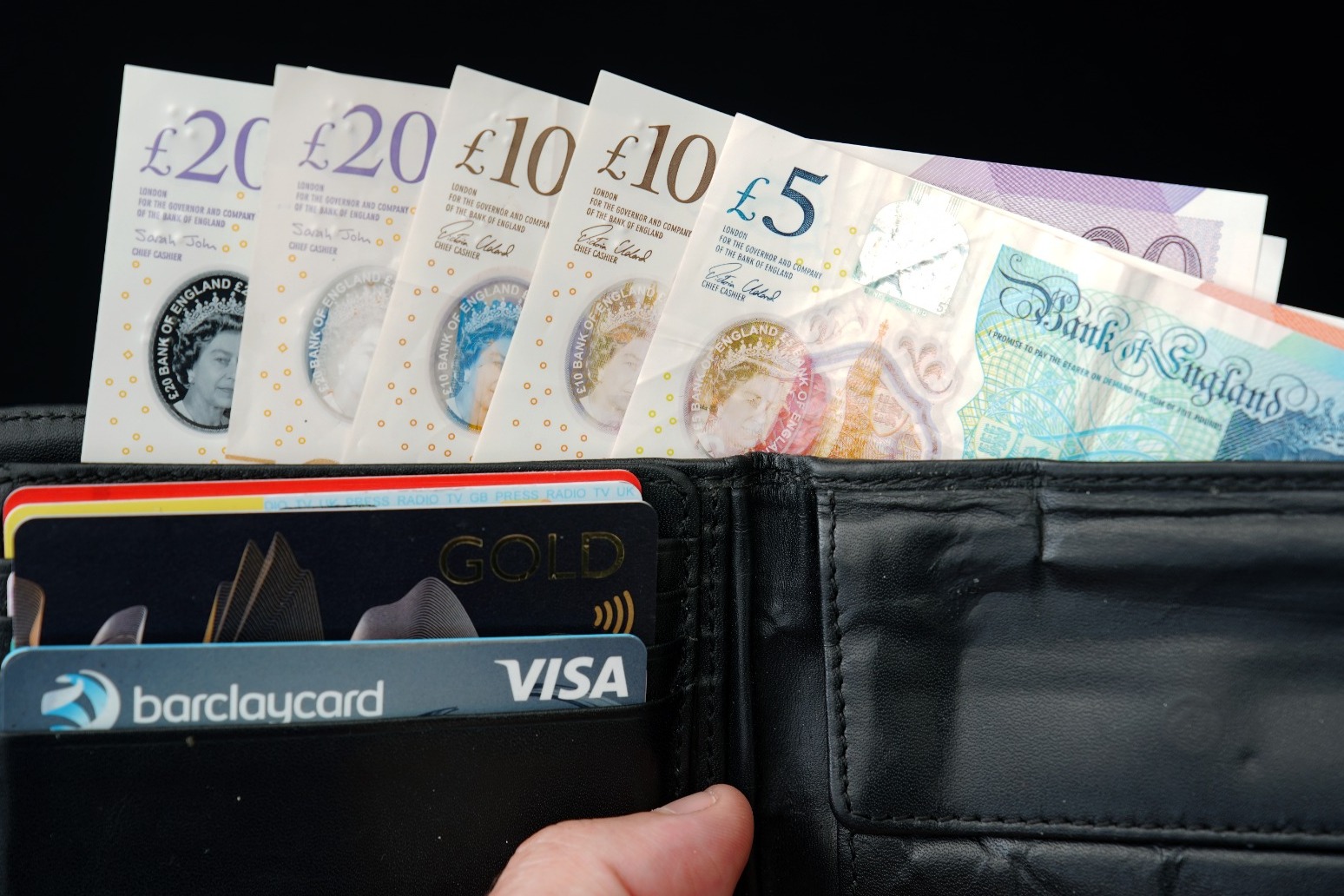
One in seven high street businesses ‘have gone cashless in the past year’
One in seven high street businesses in a survey said they have gone cashless in the past year.
While 77% of small and medium-sized retailers said they accept cash, 14% said they had gone cashless over the previous 12 months, according to the research, carried out in September 2025.
The survey of more than 1,100 SMEs (small and medium-sized enterprises) across the UK was carried out for a “keeping choice alive” report, published by ATM and cash access network Link.
The survey indicated that 46% of in-person transactions were still cash-based and in sectors such as independent retail, cafes and pubs, convenience stores, and launderettes, cash usage was consistently above this average.
The biggest driver to becoming a “cashless” business in the survey was fraud prevention, followed by security concerns and a lack of customer demand.
Around a fifth (19%) of businesses also felt digital payments made bookkeeping and accounting easier to manage.
A lack of deposit facilities and the closure of the local bank branch were also highlighted among businesses’ considerations.
Four fifths (82%) say they would value better access to deposit facilities, such as post offices and banking hubs (where several banks share a single space).
Some businesses also highlighted the cost of handling cash as a concern.
But among businesses that accept cash, nearly half (46%) said they actively encourage its use, according to the survey, carried out by Focaldata.
Avoiding card fees was seen as one of the benefits of accepting cash, along with liquidity and the speed of transactions.
A majority (53%) of businesses surveyed would support mandating cash acceptance.
The report advocated a “joined up” approach to tackling crime on the high street to help businesses prevent theft and fraud and help staff feel safer.
It also said cash acceptance should be regularly monitored to track “where cash is truly usable, not just available”.
The report was led by Link’s Consumer Council, and supported by the Federation of Small Businesses (FSB), the Post Office and PayPoint.
Joanna Wallace, chairwoman of Link’s Consumer Council, said: “It’s becoming more common to see a sign next to the till in a shop or cafe saying ‘card only’ – 20 years ago it may have been ‘cash only’.
“The ways we want to pay are changing and so are the ways we are able to pay – this research shows the complex range of factors that affect any business owner’s choice of payment types.
“But the continued importance of cash on the high street rings true through it all.”
Nick Quin, chief corporate affairs officer at Link, said: “We are making sure that people can access their cash, and businesses can deposit their cash, in every corner of the UK.
“That is critical as more and more people choose to pay with their contactless card.
“This research shows that we must continue to give businesses the option to bank their cash locally, and keep a close eye on acceptance.
“But it also shows that businesses are committed to allowing people the choice of how to pay.”
Jenny Ross, editor of Which? Money, said: “While some businesses are choosing to go cashless, cash remains hugely important for many consumers, particularly those on lower incomes who rely on it to budget and manage their spending.
“Businesses should not feel forced to drop cash because of shrinking banking infrastructure or difficulties depositing earnings locally.”
Published: by Radio NewsHub