
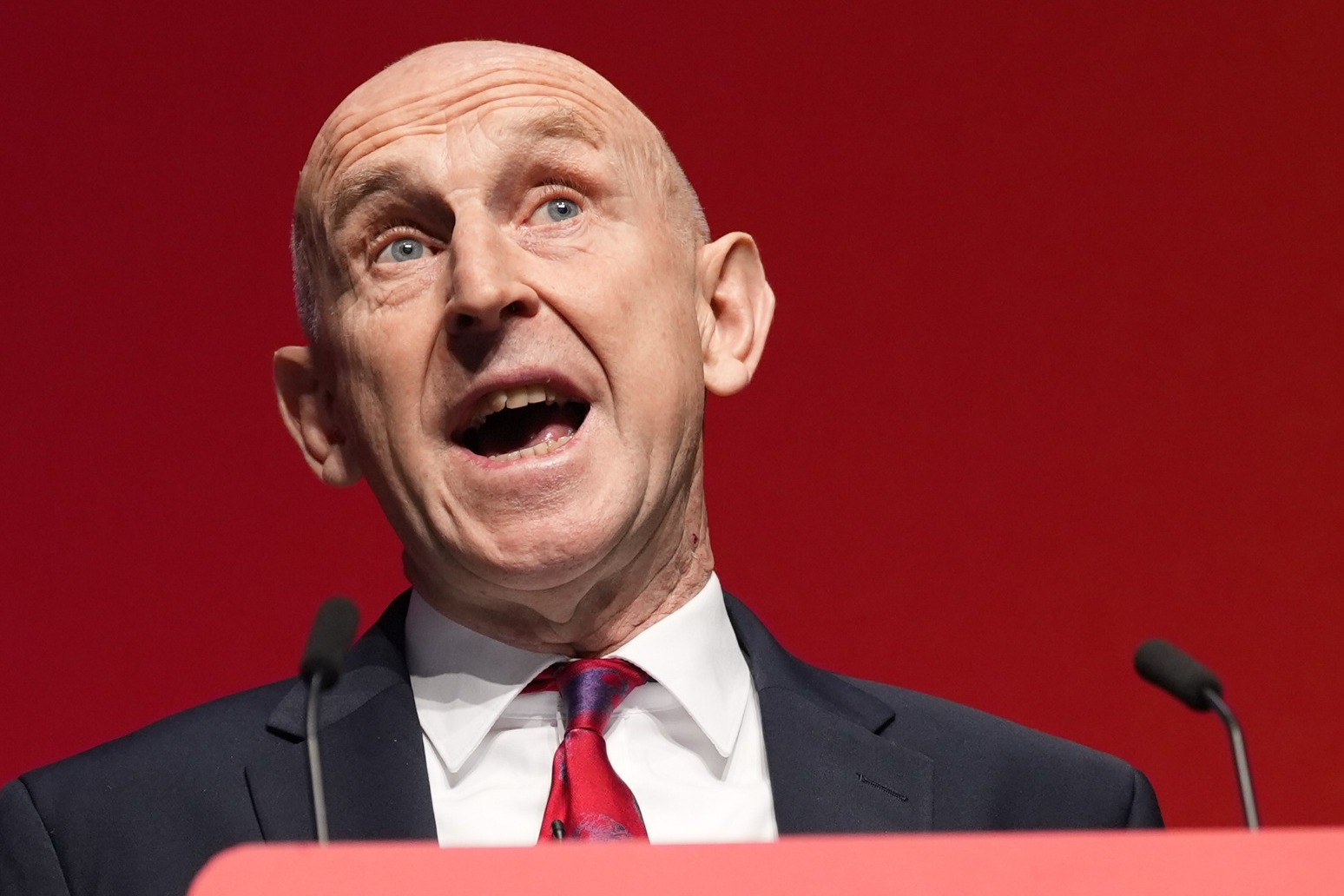
Healey warned bank taxes will stifle growth as he faces competing Budget demands
Chancellor John Healey is facing competing demands to raise billions in extra taxes – including on banks – and to cut business costs as he prepares to deliver the first Budget of Andy Burnham’s Government.
The Institute for Public Policy Research (IPPR) has urged Mr Healey to raise an extra £16 billion to help struggling households, including by reforming capital gains tax, ending taxpayers footing the bill for Bank of England losses, and taxing the windfall profits of commercial banks.
The think tank, which has been influential in Labour policy-making, said the measures would also help rebuild the Chancellor’s fiscal buffer which it estimates has dropped by up to £15 billion since the spring.
But the Confederation of British Industry (CBI) intensified calls for Mr Healey not to hike taxes for the financial services sector, while the Tories warned that such a move would stifle growth.
The business group said the Chancellor “should be wary of asking business to shoulder more” amid already-high energy, employment and tax costs, arguing this would dampen investment.
The CBI instead recommended giving firms “breathing space”, including by removing policy costs from non-domestic electricity bills, and by raising the threshold at which employers begin paying national insurance contributions from £5,000 to £6,000 to help create more entry-level jobs.
It also urged the Government to “tackle the most damaging business rates cliff edges”, simplify the tax system, and encourage private investment and the adoption of artificial intelligence across the private sector.
CBI chief executive Rain Newton-Smith said: “The autumn Budget is the first opportunity for the Burnham government to turn its economic ambitions into action.
“Businesses stand ready to invest, innovate and create jobs, but they need the right conditions and confidence to do so.
“With fiscal headroom in short supply, every decision should be judged by whether it strengthens the foundations for long-term growth.
“Business costs ultimately become household costs, so adding further pressure to businesses already facing significant cost pressures would make that task harder.
“By tackling some of the biggest barriers facing firms, the Government can instead create the conditions for investment, expansion and hiring.”
In its Budget submission, the CBI warned against “further sector-specific taxation – including on a banking sector already facing a higher tax rate than competing international financial centres”.
Amid mounting speculation that Mr Healey could choose to target banks with higher levies in his October 28 fiscal event, the Conservatives also warned this could damage Britain’s competitiveness.
The party pointed to UK Finance analysis suggesting that UK banks face an effective tax rate of 46.5%, compared to 39.1% in Frankfurt and 27.9% in New York.
Leader Kemi Badenoch is expected to highlight the challenges facing the sector during a visit to a financial services firm in Edinburgh on Thursday.
Shadow chancellor Andrew Griffith said: “Britain needs growth. But a raid on the financial services sector will stifle it. Labour should be backing businesses and wealth-creators, not making their lives even harder.
“Rather than hiking taxes yet again, Labour should cut spending.”
But the IPPR called for tax rises as part of a package to restore the fiscal headroom – the leeway against the day-to-day spending rules – to more than £20 billion.
The think tank suggested this had shrunk to as little as £9 billion since the Office of Budget Responsibility’s March forecast, in part because of the Iran war driving up government debt costs and early spending pledges by the Prime Minister.
The IPPR’s proposed reforms include raising some £10 billion by bringing capital gains tax rates into line with income tax, while introducing a new “super-exemption” for start-ups.
However, Mr Healey has reportedly ruled out equalising the levy on the profits made after selling investments or assets with income tax.
The IPPR recommended generating £5 billion from deferring Bank of England losses from quantitative easing, £1 billion from a temporary surcharge on commercial banks’ windfall profits, and £1.5 billion from a tax of up to 2% on the online retail sales to fund high street business rates cuts.
It called for the money to be used to bring down household bills, including by guaranteeing a £2,000 cap on household energy bills for the first half of 2027, freezing fuel duty and limiting private rent increases.
The IPPR also urged ministers to unfreeze local housing allowance for households receiving universal credit.
Executive director Harry Quilter-Pinner said: “This Budget needs to deliver by bringing household bills down and getting the economy growing, while doubling down on fiscal responsibility.
“That means raising some additional revenues in ways that support growth: reforming capital gains tax with pro-entrepreneurship exemptions, introducing an online sales tax while cutting high street business rates, stopping taxpayers footing the bill for Bank of England losses, and temporarily taxing bank windfalls.
“In all that could raise around £16 billion. The goal should be simple: give people breathing room today, while building an economy that can raise living standards tomorrow.”
Published: by Radio NewsHub